
Heel Pain and Plantar Fasciitis: Causes and Treatment
Why your heel hurts in the morning, what actually helps, and when to see a specialist.
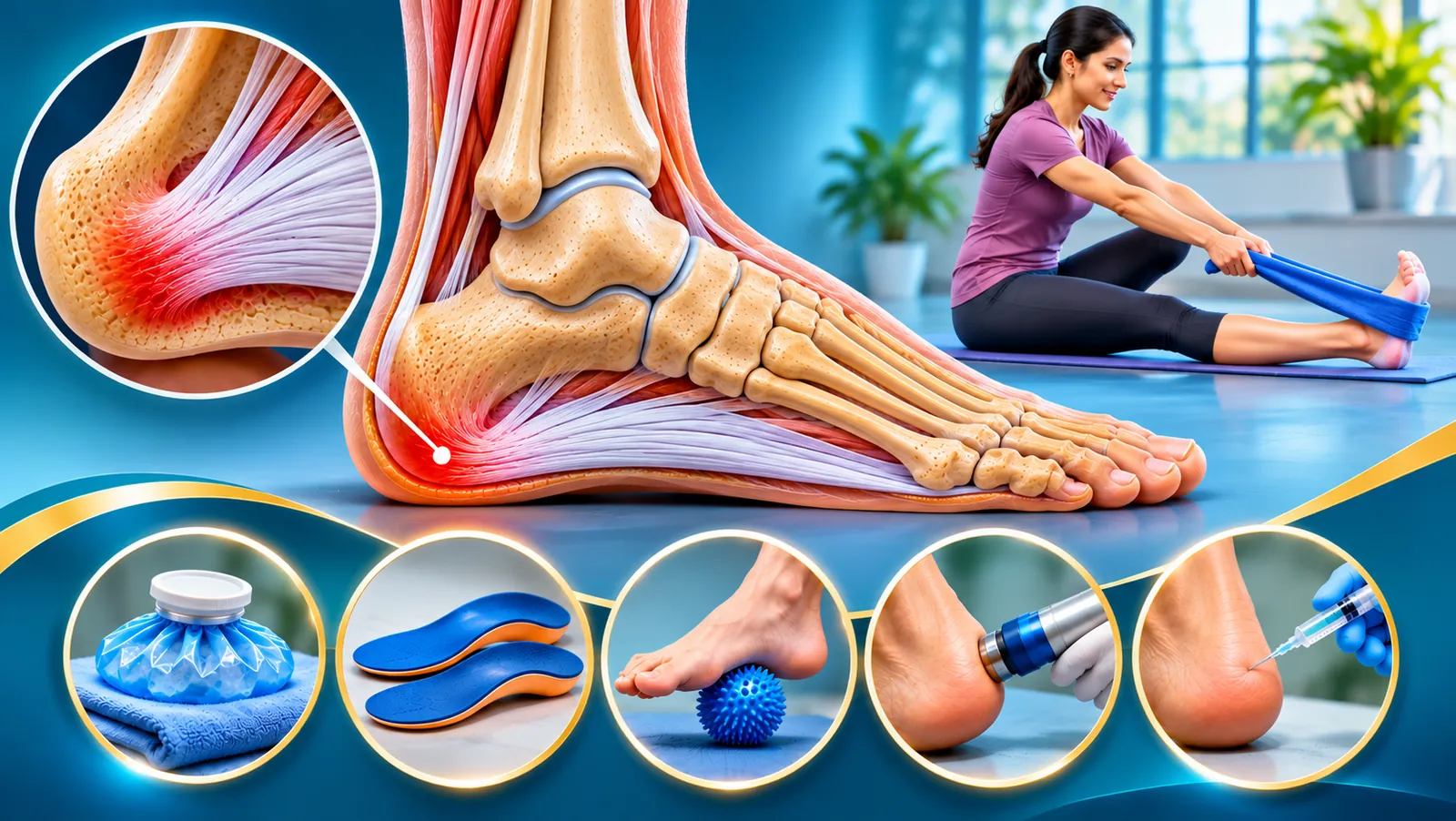
Does your heel hurt when you take your first steps out of bed? Does the pain ease as you walk, only to return after a long day? This familiar pattern often points to plantar fasciitis—more precisely, plantar fasciopathy—but not every painful heel has the same cause. Understanding the difference helps you choose effective treatment and avoid unnecessary procedures.
1What Is Plantar Fasciitis?
The plantar fascia is a strong band of connective tissue running from the heel bone towards the toes, supporting the arch and helping the foot absorb load. Plantar fasciitis is a common cause of pain beneath the heel. Although its name suggests inflammation, persistent cases often involve degenerative changes and altered tissue loading, which is why “plantar fasciopathy” is increasingly used.
2What Causes Heel Pain?
Plantar fascia overload may follow a sudden increase in walking or running, prolonged standing, unsuitable footwear, reduced ankle flexibility, or changes in body weight. Occupations involving long periods on the feet and some running activities can increase risk. A single cause is not always identifiable.
Other causes include Achilles tendinopathy (pain behind the heel), heel fat-pad syndrome (central heel pain), calcaneal stress fracture, nerve entrapment, inflammatory arthritis, and, less commonly, infection. A heel spur on an X-ray does not automatically explain the pain.
3What Are the Typical Symptoms of Plantar Fasciitis?
The hallmark is sharp or aching pain beneath the heel, often close to the inner heel, with the first steps in the morning or after sitting. Symptoms may ease after warming up but return with prolonged standing, walking, or running. Local tenderness is common. Burning, widespread numbness, or pain predominantly behind the heel suggests another diagnosis may need consideration.
4How Is Plantar Fasciitis Diagnosed?
Diagnosis is usually clinical: a clinician reviews symptom timing, activity, footwear, and examines heel tenderness, ankle mobility, gait, and nerve function. X-rays are not routinely necessary for a typical presentation. Ultrasound or MRI may be considered when symptoms are atypical, a stress fracture is suspected, or recovery is not following the expected course.
5What Is the Best Treatment for Plantar Fasciitis?
Most patients improve with a consistent non-surgical programme. A combination of plantar fascia–specific stretching, calf stretching, progressive strengthening, activity adjustment, and appropriate footwear is commonly recommended. Rigid rest or repeatedly pushing through severe pain can both delay progress.
Supportive shoes and short-term taping may reduce symptoms. Prefabricated or custom foot orthoses can be useful as part of a broader plan, but should not be presented as a stand-alone cure. Night splints may help selected patients with persistent first-step morning pain.
6Four Practical Exercises and Self-Care Strategies
Plantar fascia stretch: While seated, gently pull the toes back towards the shin until a stretch is felt along the sole. A short session before first steps may be helpful.
Calf stretch: With hands against a wall, stretch the back calf with the knee straight, then repeat with a slightly bent knee to address different calf muscles.
Progressive heel raises: Begin with a tolerable level of supported calf raising and increase resistance gradually as pain and strength permit.
Manage daily load: Temporarily reduce running, jumping, or long periods standing if these flare symptoms. Choose tolerable alternatives and rebuild activity steadily.
Exercise should be adapted to individual capacity. Stop and seek assessment if exercise causes marked worsening, numbness, or an inability to bear weight.
7Ice, Medication, Insoles, and Night Splints: What Helps?
An ice pack wrapped in a towel may offer temporary pain relief after activity. Short courses of pain medication may be appropriate after considering medical risks. Supportive footwear and taping can make daily activity more comfortable. Night splints may help when morning first-step pain is persistent, particularly alongside stretching. None of these measures replaces gradual loading and rehabilitation.
| Treatment | Potential role | Important note |
|---|---|---|
| Stretching and strengthening | Core rehabilitation strategy | Progress gradually and consistently |
| Supportive shoes and taping | Short-term symptom relief | Useful alongside exercise |
| Foot orthoses | May improve comfort and loading | Not a stand-alone treatment |
| Night splints | Selected persistent morning pain | Comfort and adherence vary |
| Shockwave therapy | Option for resistant symptoms | Benefit varies; specialist selection |
| Corticosteroid injection | May reduce pain in the short term | Potential fascia rupture and fat-pad injury |
8When Are Injections or Shockwave Therapy Considered?
If symptoms remain troublesome despite a sustained rehabilitation programme, a clinician may revisit the diagnosis and discuss additional treatment. Extracorporeal shockwave therapy may help some patients with chronic plantar fasciopathy. Corticosteroid injections can provide short-term relief but carry risks, including plantar fascia rupture and fat-pad damage. Platelet-rich plasma has mixed evidence, with variable protocols and uncertain comparative benefit. No injection should be presented as a guaranteed cure.
9How Long Does Plantar Fasciitis Take to Heal?
Recovery commonly takes weeks to months, and some patients experience symptoms for six months or longer. A gradual improvement in morning pain, walking tolerance, and activity recovery is more useful than expecting a fixed healing date. Persistent symptoms should prompt reassessment for alternative diagnoses and modifiable contributors.
10When Is Surgery Necessary for Heel Pain?
Surgery is rarely needed. It may be discussed after prolonged, disabling symptoms that have not responded to an adequate course of well-delivered non-surgical treatment and after other causes have been excluded. Surgical procedures carry risks such as nerve injury, persistent pain, and altered foot mechanics. Decisions should be individualised by an experienced foot-and-ankle specialist.
11When Should You See a Doctor Urgently?
Seek prompt assessment if heel pain follows significant injury, you cannot bear weight, or you have fever, marked redness or swelling, an open wound, new neurological symptoms, or rapidly worsening pain. People with diabetes and a new foot wound or suspected infection should seek urgent medical attention.
Conclusion: Treat the Cause, Not Just the Pain
Plantar fasciitis is one of the most common reasons for heel pain, but it is not the only one. Most patients improve without surgery when treatment combines the right diagnosis, load management, progressive exercise, and practical footwear changes. Persistent or unusual symptoms deserve reassessment rather than repeated unproven interventions.
Frequently asked questions
Why is my heel pain worst in the morning?
The plantar fascia can be sensitive after rest; the first steps reload the tissue and trigger pain.
Is a heel spur the same as plantar fasciitis?
No. Spurs may be seen in people with or without heel pain.
Should I stop walking completely?
Usually not. Adjust walking to a tolerable level and progress gradually.
Can plantar fasciitis heal without surgery?
Yes. Most cases respond to non-surgical management over time.
Are steroid injections a permanent cure?
No. Relief may be temporary, and injections carry risks.
Scientific References and Authoritative Resources
- American Physical Therapy Association / Academy of Orthopaedic Physical Therapy. Heel Pain—Plantar Fasciitis: Revision 2023 Clinical Practice Guideline. J Orthop Sports Phys Ther. 2023. https://www.jospt.org/doi/10.2519/jospt.2023.0303
- American Academy of Orthopaedic Surgeons. Plantar Fasciitis and Bone Spurs. https://orthoinfo.aaos.org/en/diseases--conditions/plantar-fasciitis-and-bone-spurs/
- NHS. Plantar fasciitis. https://www.nhs.uk/conditions/plantar-fasciitis/
- Martin RL et al. Heel Pain—Plantar Fasciitis: Revision 2023. Journal of Orthopaedic & Sports Physical Therapy. https://pubmed.ncbi.nlm.nih.gov/?term=Heel+Pain+Plantar+Fasciitis+Revision+2023
More from the Cepienta blog
- Spine
Herniated Disc: When Is Spine Surgery Necessary?
Does a herniated disc need surgery? Learn warning signs, sciatica treatments, MRI findings, microdiscectomy benefits, risks, and recovery timelines.
- Spine
Lower Back Pain: Causes, Treatment, and Exercises That Help
Lower back pain? Learn the common causes, warning signs that need a doctor, treatments that work and 8 simple exercises to ease pain and protect your back.
- Knee
Knee Osteoarthritis: Can You Avoid Surgery? Evidence-Based Treatments That Really Work
An evidence-based guide to non-surgical knee osteoarthritis treatment, pain relief, joint preservation, and when knee replacement may be necessary.